For over 65 years the business now called Richmond Rolling Solutions has supplied wheels, castors and handling equipment to Australian industry. Formerly Richmond Wheels and Castors, the Australian, family owned and operated company felt the time was right to revitalise the business, and the new name was the most visible part of that. A rebrand of that scale needed a website to match, and the existing one had been built around the old identity.
Case study · Manufacturing & industrial
Richmond Rolling Solutions: a website supporting a brand refresh.
Richmond Rolling Solutions is a “one-stop-shop” for wheels, castors and handling equipment, offering a range of over 8000+ products and the expertise of in-house engineers.
- Sector
- Manufacturing & industrial
- Channels
- Email · WordPress · WooCommerce
Website projectDigital experience

The challenge
What needed to change.
Along with changing its name, the company’s eCommerce platform required functional updates so it could keep providing the quality of service and product range customers expected. As an industry leader with a range of that size, it was a priority to develop a streamlined discovery page that clearly conveyed the breadth of the offering without burying the visitor in it.
Servicing is also a huge drawcard for the business, and its complimentary quotes needed to become an easily accessible digital experience rather than a phone call or an email.
Approach
How the work took shape.
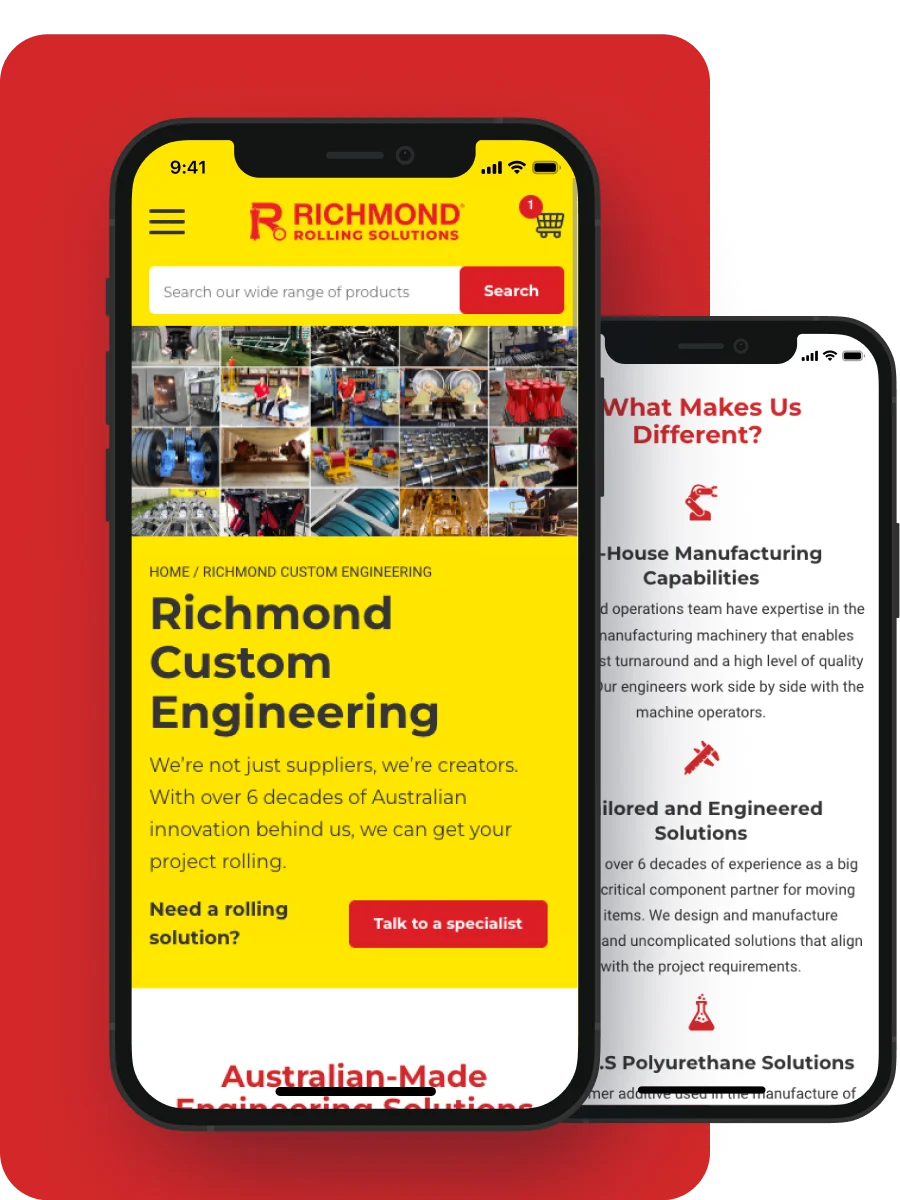
We joined the project to design and develop a new website encompassing everything from discovery through to support. The rebrand gave us a clean starting point: rather than restyle the old website, we could rethink how a customer finds a product, compares options, requests a quote and comes back for service.
Two principles guided the decisions. Functionality first, because an eCommerce platform for industrial buyers has to work every time. And easy navigability, because the range is enormous and a customer should never need to know the catalogue to find the right castor.
The team worked through wireframing, design, development, testing, deployment and post launch defect support, so the people who planned the structure saw it through to a stable live website.
WordPress with WooCommerce was the platform, giving the business a familiar content management system and a proven eCommerce layer that could handle the product range and the checkout options it needed. Gravity Forms handles the quote requests and Mailchimp the email marketing, so each part of the customer journey runs on a tool the team can manage day to day.
Because quotes were as important as purchases, we treated the quote request as a journey in its own right alongside the cart, rather than a contact form bolted on at the end.
The shift
A quote request deserved the same care as a purchase, so it was given its own journey through the website.
Talk to us
Planning an eCommerce website like this? Talk it through with us.
Tell us what your project needs to do, and we will help identify the next step.
The work
The work, up close.
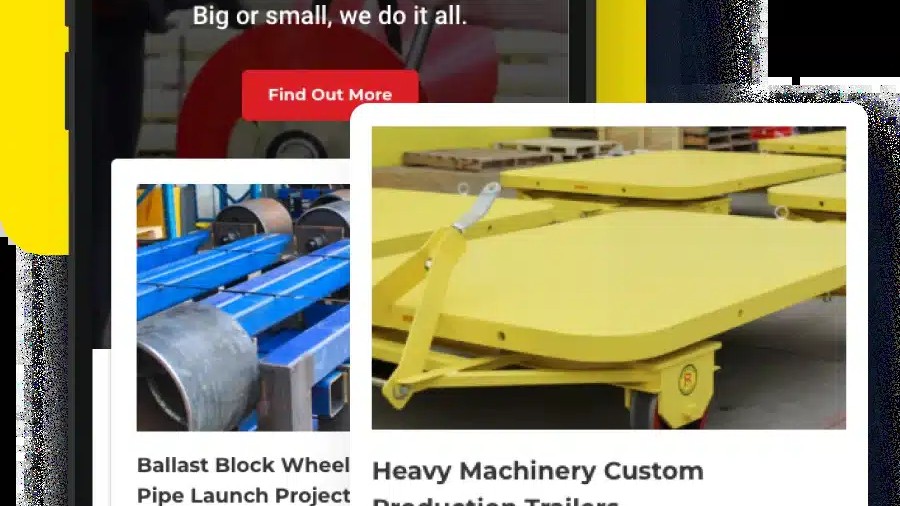
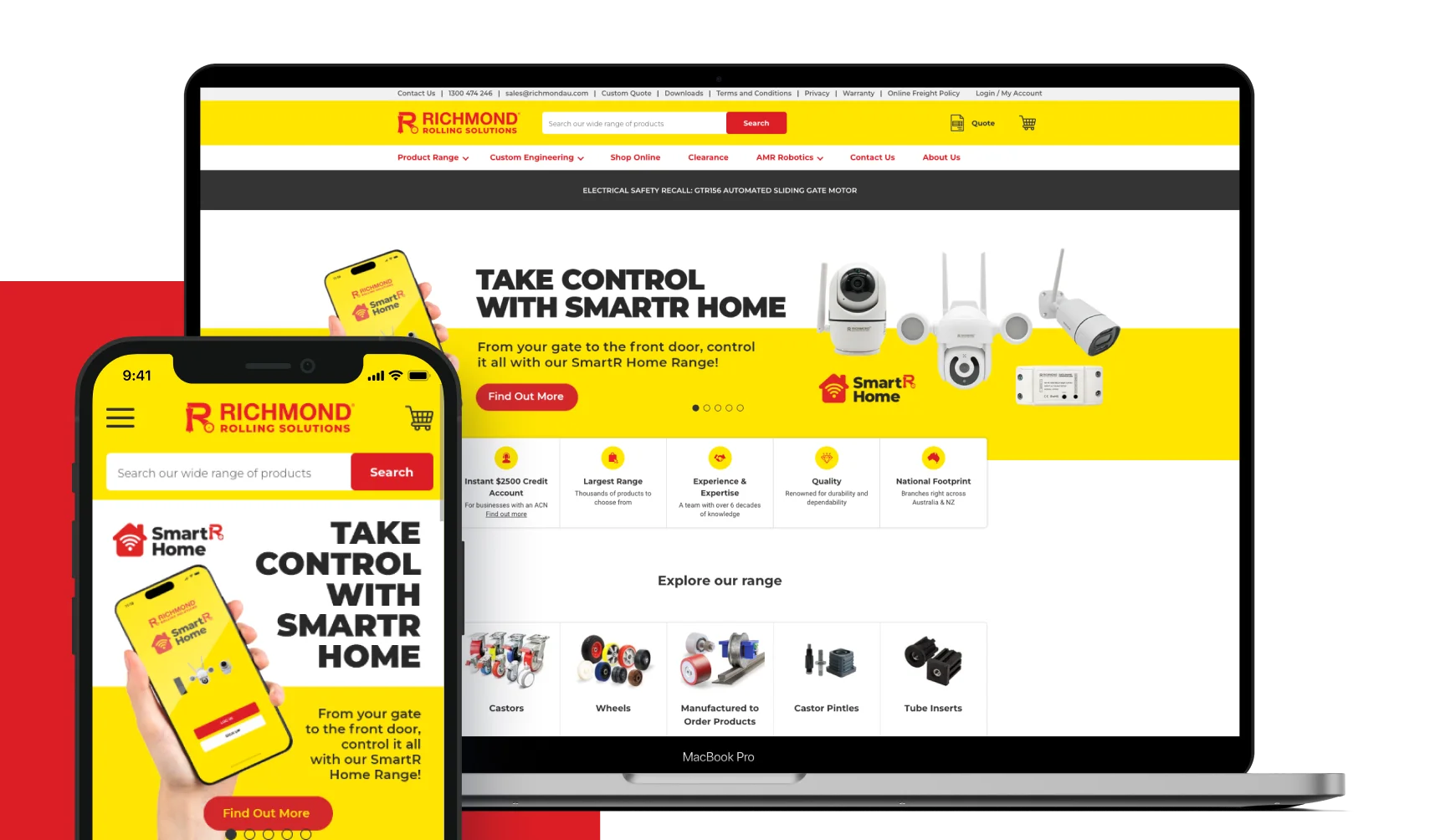
The new website delivers an improved customer journey from the landing page through to the shopping cart. It conveys the variety of the offering and asserts the company’s market positioning as a one stop shop for all rolling solutions, with a discovery page that leads visitors into the range rather than expecting them to search blind.
The checkout was rebuilt with distinct click and collect and Get a Quote options, so a customer can buy off the shelf or start a conversation about a larger or more specialised order, and staff receive the right kind of request each time.
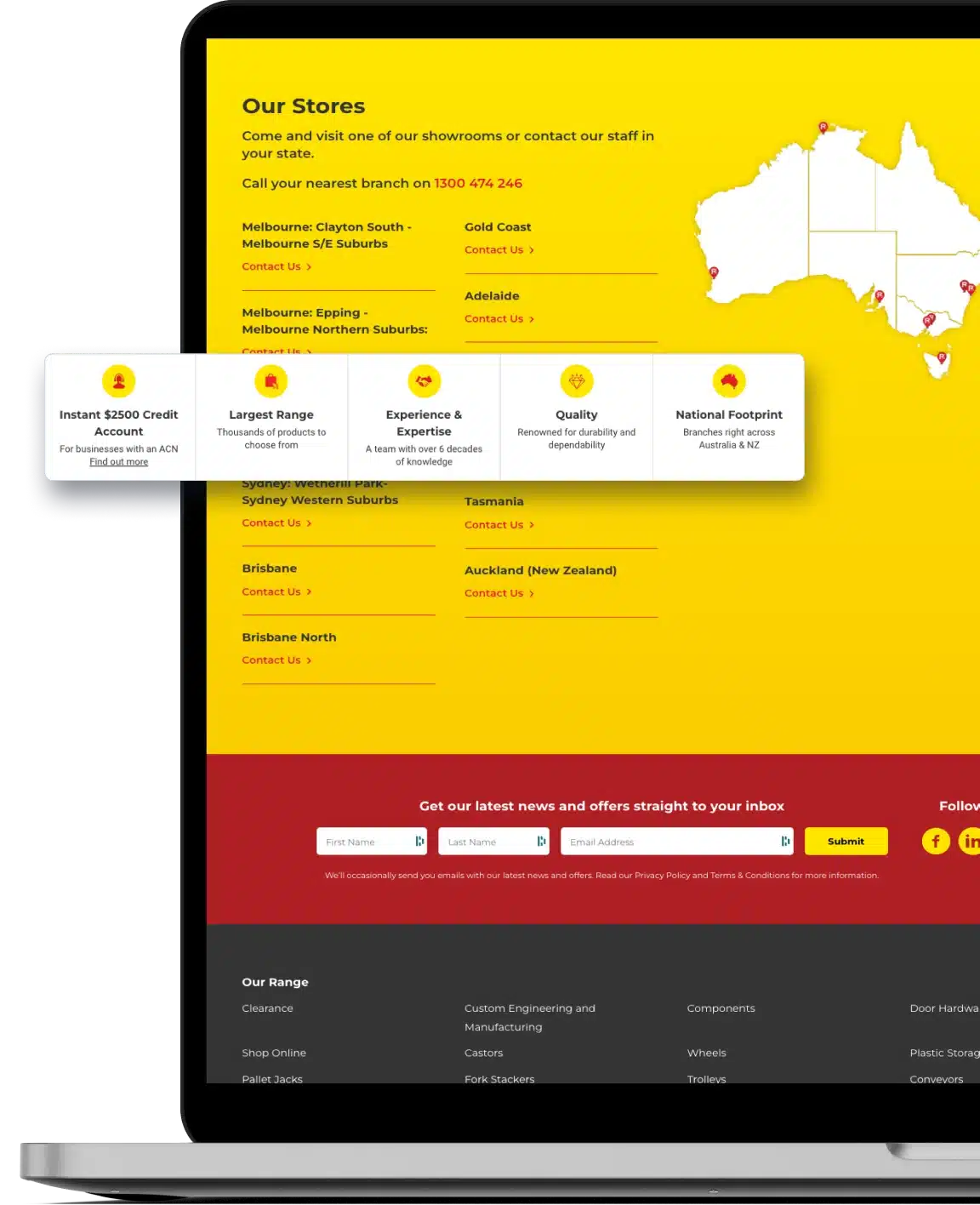
Customers can create an account and log in to create quote requests and track their status, which turns a process that used to happen by phone and email into something both sides can see at any time. The branch stores page presents each location, so customers know where to collect and who to call.
Behind the scenes, Gravity Forms captures quote and contact requests, Mailchimp powers the EDM strategy, using customer data to drive conversions, and WordPress gives the team control of content across the website. Email became a channel in its own right, with customer data guiding what each campaign said and to whom.
A CRM system was integrated so staff can monitor sales, manage inventory and improve overall customer care from one place, with WooCommerce running the store itself. The result is a platform that looks like the new brand and works like a modern business: responsive across desktop and mobile, straightforward to navigate, and ready for the company to keep adding products and services as it grows.
Keep reading
Related work.
 Nostra Homes
Website design and development that lifted traffic 245% and leads 424%.
Read more →
 FarmCap
Website design and development speaking to farmers, brokers and investors in one place.
Read more →
 Kitestone
WordPress and WooCommerce website that teaches a new benchtop category while it sells.
Read more →