Blog
Website technical debt: when small fixes become a bigger business problem.
Identify website technical debt, measure its business impact and choose whether to contain, remediate, refactor, replatform or rebuild.
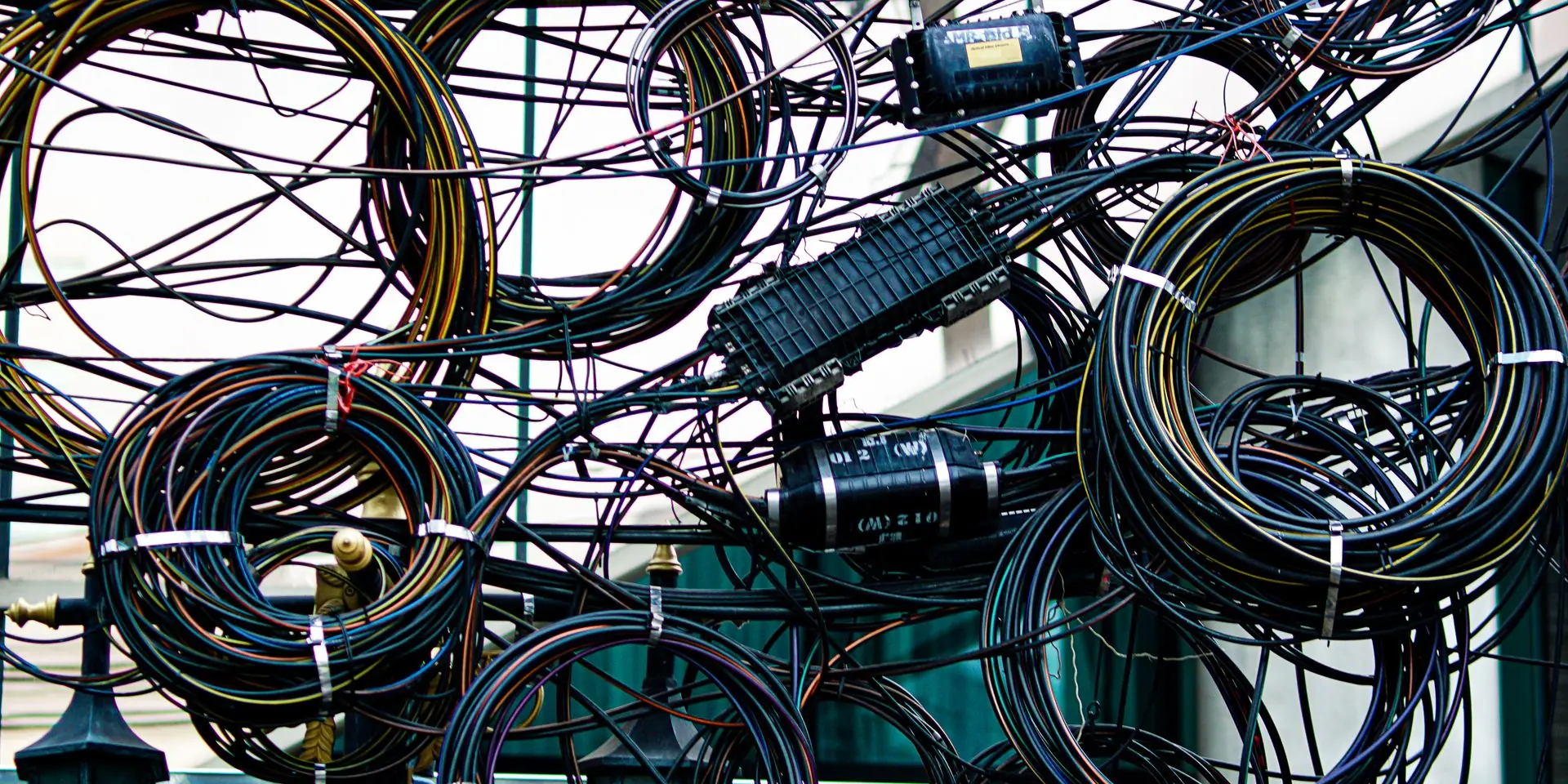
Technical debt rarely announces itself as one dramatic failure.
It appears when a routine content change needs a developer. A plugin cannot be updated because custom code depends on its old behaviour. The team is afraid to touch checkout before a campaign. A location is stored in three places. Deployments rely on one person’s memory. Each new integration adds another manual reconciliation.
The website still works, but change becomes slower, riskier and more dependent on specialists.
Software writer Martin Fowler describes technical debt as the extra effort created when deficiencies in internal quality make a system harder to modify. The "interest" is the additional work paid during later change.
Not every old website has material debt. Not every defect is debt. Not every debt item should be removed immediately.
The short answer.
Website technical debt can accumulate across seven domains:
- Platform and dependencies
- Code and component architecture
- Integrations and data
- Release process and environments
- Performance and accessibility
- Content and search structure
- Documentation and operational ownership
Debt is visible through the change it makes harder.
Prioritise debt by business consequence, frequency of contact, evidence, support status, change horizon and reversibility. Then choose whether to accept, contain, maintain, refactor, replace, replatform or retire.
Technical debt is not a synonym for "bad website".
Distinguish four categories.
Defect
Something does not behave as specified or intended. A broken form can be a defect without indicating structural debt.
Operational risk
A condition could lead to loss, disruption or harm. Unsupported software may create security and continuity risk, although severity depends on exposure, vulnerability and controls.
Technical debt
An internal system condition creates additional effort or constraint during operation and change. It may be a deliberate short-term trade-off, an inherited limitation or an issue discovered only as requirements evolve.
Improvement opportunity
The website could create more value through better UX, content, speed, accessibility or functionality. That does not necessarily mean the current implementation contains debt.
One item can sit across categories. A difficult-to-update extension may be debt because it slows change, risk because it blocks security updates and a defect only if it currently fails.
Clear classification prevents every backlog item from being sold as a crisis.
How technical debt forms.
Debt is not always evidence of negligence.
It can result from:
- A conscious deadline trade-off
- Incomplete information at the time
- Business requirements changing
- A vendor deprecating an API
- Platform or runtime evolution
- Several agencies extending the system differently
- Short-term campaign work becoming permanent
- Acquisitions and portfolio growth
- Missing investment in maintenance
- Staff turnover and lost knowledge
- A successful website outgrowing its original job
Fowler’s technical-debt quadrant distinguishes deliberate and inadvertent debt as well as prudent and reckless choices. The useful implication is that teams should record intentional compromises and revisit them, while recognising that some debt only becomes visible through learning.
The objective is not moral judgement. It is to understand current consequence.
Domain 1: platform and dependencies.
Websites depend on CMS versions, runtimes, libraries, themes, extensions and third-party services.
Signals include:
- Updates repeatedly fail or are deferred
- A component is unsupported
- Custom code depends on obsolete behaviour
- Extensions duplicate capability or conflict
- Nobody knows which dependencies are used
- A vendor account or licence is missing
- The website cannot move to a supported runtime
OWASP’s 2025 Software Supply Chain Failures guidance includes vulnerable, unsupported or out-of-date software across operating systems, servers, applications, APIs, runtimes and libraries. That security guidance does not make every available update an emergency; it demonstrates why dependency visibility and support status matter.
Official platform policy should govern conclusions. WordPress, for example, states that only its latest version is officially supported, while some security fixes may be backported as a courtesy. A specific website still needs version, extension and configuration evidence before risk is assessed.
Domain 2: code and component architecture.
Code debt appears when small changes touch many unrelated areas, components duplicate logic or presentation is tightly coupled to content and data.
Signals include:
- The same component has several inconsistent copies
- Business rules are embedded in templates
- One change creates regressions elsewhere
- Automated testing is absent around critical logic
- Code cannot be deployed independently or rolled back safely
- Only one person understands key areas
- New features require repeated workarounds
Untidy code is not automatically material debt. Ask how often the area changes and what extra effort or failure it creates. A rarely touched internal template may matter less than fragile checkout logic contacted every month.
Domain 3: integrations and data.
Integration debt accumulates through unclear sources of truth, point-to-point connections, manual reconciliation and undocumented transformations.
Examples include:
- Customer data differs across website and CRM
- Product attributes are mapped manually
- Failed exchanges are not visible
- Credentials belong to former staff
- An API is deprecated
- Several systems update the same field
- A nightly spreadsheet upload has become business-critical
Map the business outcome, data, direction, frequency, authentication, failure behaviour and owner. Replacing the connector without correcting ownership or data quality may transfer the debt rather than remove it.
Domain 4: release process and environments.
A website can contain good code and still be expensive to change because delivery controls are weak.
Signals include:
- Changes are made directly in production
- Development and staging do not resemble production
- The code repository is incomplete
- Database or content changes cannot be reproduced
- Backups exist but restoration is unverified
- Releases depend on undocumented manual steps
- There is no clear rollback path
- Quality assurance begins only after deployment
This debt increases the risk premium on every improvement. Establishing environments, repository discipline, release checks and recovery can produce value even when the visible website does not change.
Domain 5: performance and accessibility.
Performance debt can arise from accumulated scripts, media, extensions, rendering patterns and infrastructure decisions. Accessibility debt can arise when components and content patterns repeatedly create barriers.
Google’s Web Vitals guidance defines loading, responsiveness and visual-stability metrics. Use them as evidence, not a complete score of website value.
W3C’s accessibility guidance shows why accessibility belongs in components and authoring, not only a launch checklist. If every new page repeats inaccessible patterns, remediation should address the shared system as well as individual pages.
Avoid calling every failing automated check "technical debt". Confirm the user impact, root cause and appropriate standard.
Domain 6: content and search structure.
Technical debt is not confined to code.
Content and search debt can include:
- Duplicated service or location information
- Pages storing structured information in free text
- Uncontrolled tags and categories
- Broken internal links
- Legacy URL patterns that nobody can map
- Several pages competing for the same intent
- Metadata that cannot be governed
- Content components that prevent semantic structure
- Redirect chains accumulated through repeated redesigns
These conditions make publishing and migration harder. They can also reduce findability and create inconsistent claims.
Content modelling, consolidation and redirect correction may be a more useful debt programme than a frontend redesign.
Domain 7: documentation and operational ownership.
Knowledge debt appears when the system works only because particular people remember how.
Review:
- Architecture and integration documentation
- Asset and account ownership
- Deployment and recovery instructions
- Data dictionaries and business rules
- Licence and renewal register
- Support contacts and escalation
- Known issues and intentional compromises
- Content governance
- Exit and handover process
Documentation that nobody maintains can become misleading. Keep it proportionate and connect it to real operational tasks.
Measure the "interest" without inventing a dollar figure.
Technical debt does not need one financial score.
Collect observable evidence:
- Lead time for routine changes
- Number of manual handoffs
- Repeat incidents and regressions
- Time spent diagnosing known areas
- Updates blocked by compatibility
- Work abandoned because change is too risky
- Vendor or specialist dependence
- Content duplication and correction effort
- Release frequency and failure
- User barriers and support contacts
- Opportunities delayed by platform constraints
Compare the same type of work over time where evidence exists. Record confidence and limitations. Avoid pretending that an automated code metric measures business consequence.
Prioritise by consequence and frequency of contact.
A useful debt register includes:
- Condition and location
- Evidence
- Work or risk it affects
- Business consequence
- Frequency of contact
- Support or vulnerability status
- Dependencies
- Options
- Owner
- Decision and review date
High-consequence debt in an area changed frequently should receive stronger priority. Low-consequence debt in a component scheduled for retirement may be accepted and contained.
Security, privacy or compliance exposure can override the ordinary order and requires appropriate specialist assessment. Evidence confidence also matters: investigate uncertain high-consequence conditions before selecting a solution.
Priority follows consequence and contact, not code aesthetics alone.
Five response pathways.
1. Accept and monitor.
Use when consequence and contact are low, the condition is understood and the organisation consciously accepts it. Record the trigger that would reopen the decision.
2. Contain.
Limit exposure or stop debt spreading. Examples include freezing unnecessary extensions, isolating a fragile integration, restricting change or documenting an interim process.
Containment is not permanent resolution. It buys controlled time.
3. Maintain or upgrade.
Routine dependency, runtime, configuration and process improvements can remove debt while preserving the platform. Test compatibility and recovery.
4. Refactor or replace a component.
Improve the internal structure or replace a constrained module without rebuilding the whole website. This can suit high-contact components, forms, search, navigation, integration or deployment capability.
5. Replatform, rebuild or retire.
Use when debt is systemic, risk cannot be reduced proportionately or the current website no longer supports the business model. Preserve valuable content, URLs, data and evidence. Retirement can be valid for unused capability that creates maintenance and attack surface.
Not every debt item needs repayment in the same way.
Build a business case for debt work.
Technical debt competes with visible customer and commercial priorities. A request to "clean up the code" will often lose that competition because it does not explain what the organisation gains or protects.
Frame the decision around a defined change horizon. What does the business expect the website to support over the next planning period? Consider campaigns, new content, integrations, markets, products, accessibility obligations, provider changes and team transitions. Debt becomes commercially relevant when it slows, increases the risk of or prevents those changes.
Compare four bounded options:
- Do nothing for now: record the accepted consequence, monitoring and trigger for review.
- Contain: reduce exposure or freeze a fragile area while a later decision is prepared.
- Remediate: upgrade, refactor or replace the relevant foundation before dependent work.
- Replace or retire: move away from a system or capability that no longer has a credible lifecycle.
For each option, assess the same factors: delivery effort, interruption, future change cost, security and compliance exposure, dependency support, internal capability, reversibility and expected useful life. Include migration, testing, documentation and adoption. Otherwise a replacement option will look unfairly expensive beside an undefined patch.
Use operational evidence where possible. Release records may show repeated regression testing. Support logs may reveal recurring incidents. Editors may document manual steps. Dependency registers can identify unsupported software. Performance or accessibility testing can locate systematic constraints. Evidence does not need to become a fabricated dollar estimate to be useful.
Define acceptance before funding the work. "Reduce technical debt" is not testable. Better outcomes include moving a dependency to a supported version, removing a manual deployment step, restoring documented recovery, reducing duplicated templates, creating an owned integration monitor or enabling a planned content model. Name the owner who will maintain the improved state.
Also record residual debt. A contained integration may remain deliberately fragile until a provider is replaced. A component refactor may not address the content model. Transparent residual risk prevents a completed work item from being interpreted as a guarantee that the whole website is modern or safe.
A good debt business case does not argue that all old decisions were wrong. It explains which present constraint is worth changing, why now, what evidence supports the response and how the organisation will know the intervention worked.
When small fixes become false economy.
Continued repair deserves reassessment when:
- Each change needs another workaround
- Maintenance cannot restore a supported state
- The same failures recur across components
- A critical integration cannot be monitored or recovered
- The content model prevents required business change
- The website cannot meet required accessibility, privacy, security or performance needs proportionately
- Specialist dependence creates unacceptable continuity risk
- Planned capability would require rebuilding several foundational layers
Compare a defined remediation path with a defined replacement path. Do not compare a detailed rebuild proposal with an undefined hope that the current website can keep going.
Include migration, transition, staff adoption, provider costs and support in both options.
Public example: treat the website as several systems.
Our Bastion Lane Espresso case study describes three audits covering design, SEO and technical performance. The resulting priority schedule focused on shop and product-listing experiences, customised checkout plugin rules and continuing plugin maintenance.
The page does not use the phrase technical debt and should not be represented as a formal debt assessment. It demonstrates a transferable principle: an underperforming website can contain experience, search and technical issues that need to be separated and prioritised rather than treated as one redesign problem.
Build debt management into normal change.
Debt work should not wait for a crisis or a once-a-year cleanup.
For each feature or campaign:
- Identify the debt it touches
- Decide whether to remediate before, during or after the change
- Update documentation and tests
- Remove obsolete components
- Record new intentional compromises
- Review operational ownership
Allocate visible roadmap capacity according to business need. A debt item that repeatedly delays revenue or exposes material risk deserves different treatment from internal neatness.
Digital.gov.au’s live-stage guidance recommends repeated research, improvement and iteration for live services. Debt management is one part of keeping a website capable of change.
Record accepted residual risk.
Not every debt item should be fixed immediately. For deferred items, record the consequence, owner, containment, review trigger and expiry date so acceptance remains an active decision rather than silent neglect.
Related guidance: Rebuild, redesign or optimise, Taking over website support and Website hosting, maintenance, support and continuous improvement.
How we can help.
Technical debt matters when it changes what the organisation can do safely and efficiently.
Create an evidence register. Connect conditions to business consequences. Address high-contact, high-consequence debt before it silently taxes every project. Accept low-value debt deliberately, with an owner and review trigger.
If small website changes are becoming harder, book an initial meeting with us. We will clarify the platform, symptoms and business priorities, then recommend the smallest credible paid assessment, support, remediation or rebuild pathway. Detailed technical analysis and roadmap work begin under an agreed engagement.
Questions, answered
Frequently asked questions.
No. Age creates context, not a diagnosis. Assess supportability, change effort, risk, user experience and future requirements.
No. It can come from deliberate trade-offs, changed requirements, vendor evolution, success, acquisitions or lost knowledge. Current consequence matters more than blame.
It can remove selected dependency, configuration and process debt. Structural code, content, data or architecture debt may need refactoring, component replacement or rebuilding.
No. Some should be accepted, contained or allowed to retire with the system. Prioritise by consequence, frequency and strategy.
Tools can identify code, dependency, performance and accessibility indicators. They cannot determine complete business consequence, operating context or the right investment decision alone.
Not always. A contained issue may fit maintenance or a focused technical review. Systemic uncertainty across architecture, data, integrations and governance may justify Focused or Full Website Discovery before a rebuild or major remediation programme.
Keep reading
Related reading.
 Website support
Taking over a website built by another agency: what responsible support onboarding should cover.
11 min read Website support
Rebuild, redesign or optimise? Choosing the right next step for an existing website.
10 min read Website support